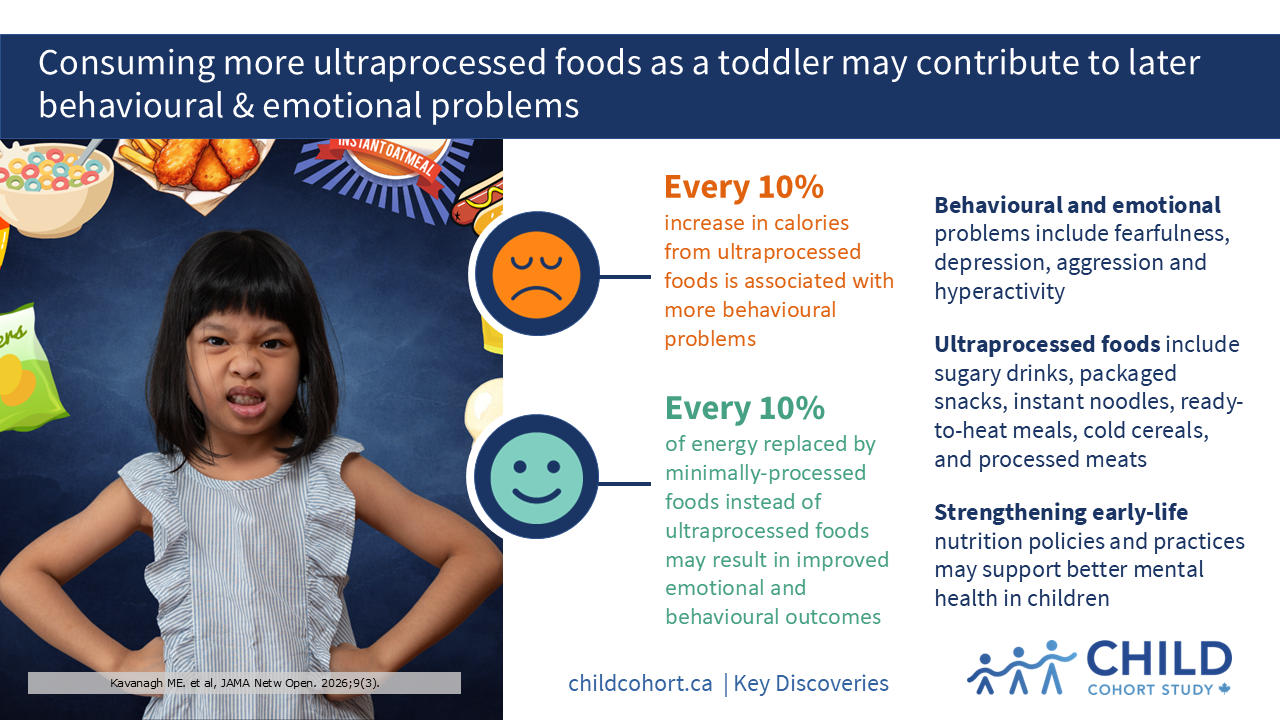
Children who consume higher amounts of ultraprocessed foods at 3 years of age tend to exhibit more behavioural and emotional difficulties by age 5, according to CHILD research.
These findings, published in JAMA Network Open, highlight the importance of early-life nutrition as a potentially modifiable factor in child behavioural development.
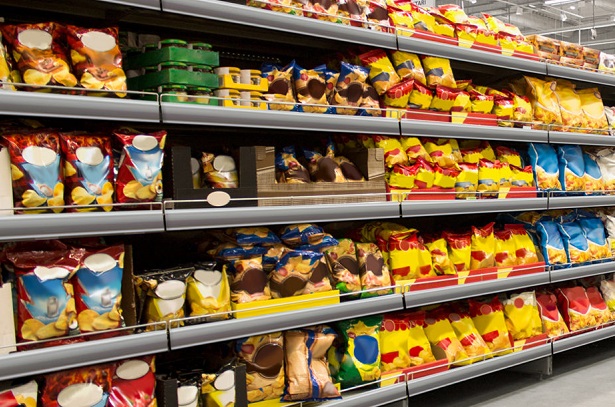
Ultraprocessed foods (UPF) are industrially formulated products made largely from refined ingredients and additives not typically used in home cooking. They are often convenient, ready-to-eat, shelf-stable and heavily marketed. Common examples include sugary drinks, packaged snacks, instant noodles, ready-to-heat meals, cold cereals, and processed meats.
MORE UPF, MORE BEHAVIOURAL PROBLEMS
The researchers analyzed data from 2,077 CHILD participants, for whom dietary information had been collected at age 3 and behavioral outcome data at age 5.
At the 5-year visit, behavior and emotional outcomes were assessed using a questionnaire completed by a caregiver. It included questions about inward-focused behavior like anxiety, fearfulness, and depression, about outward-directed behaviour like aggression and hyperactivity, as well as question about sleep-related and other challenges.
The researchers found that each 10% increment in calories from UPF to a child’s overall diet (equivalent to roughly 150 calories) was associated with higher scores across all behavioural domains — internalizing, externalizing and total difficulties. Higher scores indicate more reported behavioural challenges.
HEALTHIER FOOD, BETTER OUTCOMES
The team statistically modeled the effects of substituting 10% of energy from UPF for the equivalent energy from minimally processed foods (e.g. fruits, vegetables and other whole foods) and found that such a dietary change may result in improved behavioural and emotional outcomes.
The connection between diet and behavioural development is not entirely understood. It may be because UPF are high in components linked to inflammatory processes, which can effect neurodevelopment. Or it may be because UPF replace nutrient-dense foods, contributing to deficiencies in nutrients associated with depression-related outcomes in children. Or it may be because UPF influence the gut microbiome, which could impact brain function.
Whatever the mechanism, these findings highlight a promising strategy to help improve mental health in childhood and beyond—for example, by strengthening early-life nutrition policies and practices to support healthy behavioural development.