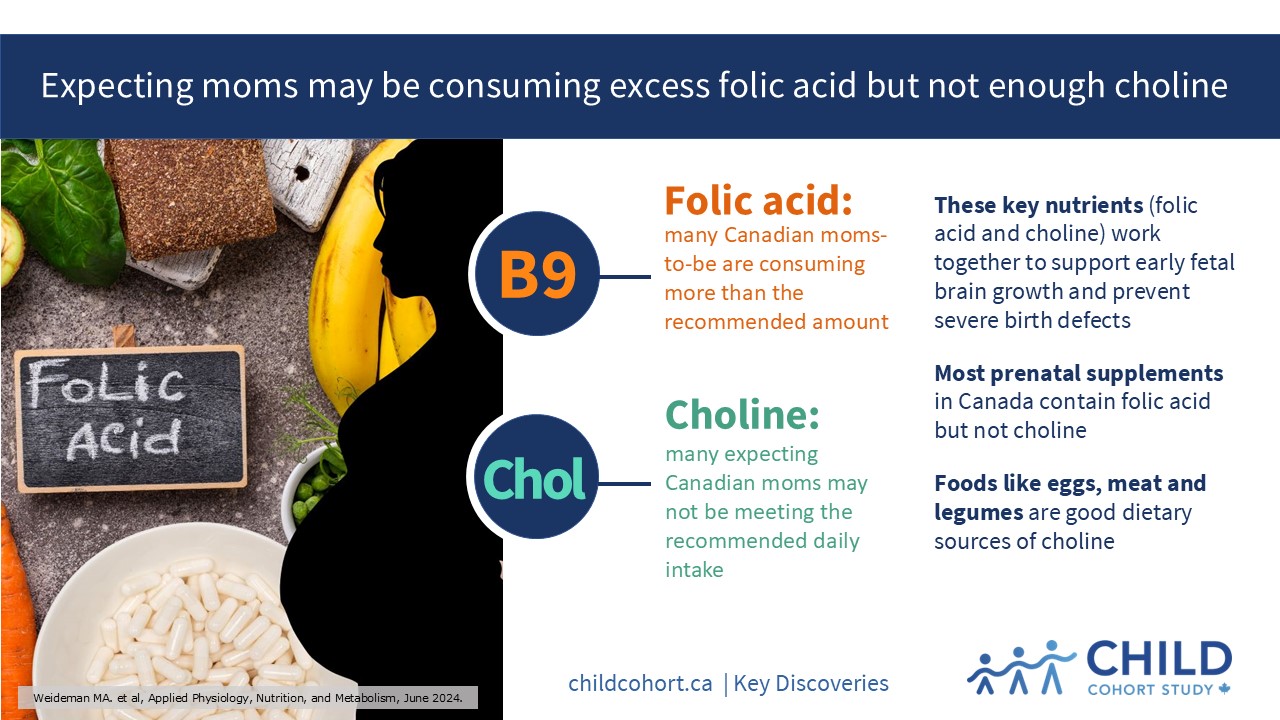
Expecting moms may be consuming excess folic acid but not enough choline
Many pregnant women in Canada are consuming supplemental folic acid at levels exceeding recommendations, but they may not be meeting the recommended level of intake for choline – according to CHILD data.
Folic acid and choline work together to support early fetal brain growth and prevent severe birth defects.
Folic acid, a synthetic form of the B-vitamin folate: lowers the risk of neural tube defects, which are serious conditions affecting the baby’s brain and spinal cord (such as spina bifida); helps form healthy red blood cells; and supports rapid tissue growth during early pregnancy.
Choline helps develop the baby’s brain, spinal cord, and memory functions and, paired with folic acid, it supports related cellular and neurological pathways.
CANADIAN GUIDELINES
In Canada, daily folic acid supplementation of 400 micrograms is recommended for women of child-bearing age and for pregnant women at low risk for neural tube defects.
Prenatal supplements in Canada typically contain higher doses of folic acid, in the range of 600–1000 micrograms. The upper tolerable intake level for folic acid is 1000 micrograms/day.
For this study, published in Applied Physiology, Nutrition, and Metabolism, researchers at UBC analyzed folic acid supplement use and dietary folate intakes in the second trimester of pregnancy in 2,996 women participating in CHILD. They also assessed the women’s Vitamin B12 and choline intake because of the metabolic relationship of these elements to folate. The nutritional information was collected by questionnaire from the mothers at 18 weeks of pregnancy.
EXCESS FOLIC ACID, NOT ENOUGH CHOLINE
The researchers found that most participants (71.6%) were consuming a daily prenatal supplement. Twenty-eight percent reported consuming a folic acid supplement and of these, 45.3% had daily supplemental folic acid intakes above the upper tolerable intake level of 1000 micrograms/day. In the entire cohort, only 3.8% of women reported not taking a prenatal supplement or a folic acid supplement. Average daily dietary total folate intake among the participants was 575 micrograms dietary folate equivalents /day.
Based on dietary information collected from the women studied, the researchers estimate that most of them also met the recommended intake for vitamin B12 from diet alone.
In contrast, only 24.8% of women met the dietary choline recommendation (average intake 450 mg/day), with an average intake of 375 mg/day. It was not captured in the study data whether any of the participants took choline supplements.
DIETARY SOURCES OF CHOLINE
In Canada, prenatal supplements typically contain folic acid and vitamin B12, but many do not contain choline. Pregnant women typically need to meet their choline intake needs from foods like eggs, meat, fish, dairy, legumes like soy or kidney bean, and some vegetables including brussels sprouts, broccoli, cauliflower, potatoes and green peas.
Additional research is required to determine the impact of high folic acid and low choline intakes during pregnancy on the health of the developing fetus. Nonetheless, given the crucial role of these nutrients in healthy fetal development, this study suggests that educational efforts on meeting prenatal dietary recommendations, targeting expecting moms and their primary caregivers, may be valuable.