Certain species of fungi living in the human gut play a key role in the development of the immune system and some childhood allergies, according to CHILD research.
These fungi may be promising targets for new treatments and preventative strategies.
BEYOND BACTERIA: MICRO VS. MYCO
The bacterial environment in the gut, known as the microbiome, has been relatively well studied. Recent discoveries in this field—including many by CHILD researchers—point the way to potential new treatments for various chronic conditions, including allergies, asthma and obesity.
By comparison, very little research has been done on the community of fungi living in the gut—the mycobiome—and its role in health and disease.
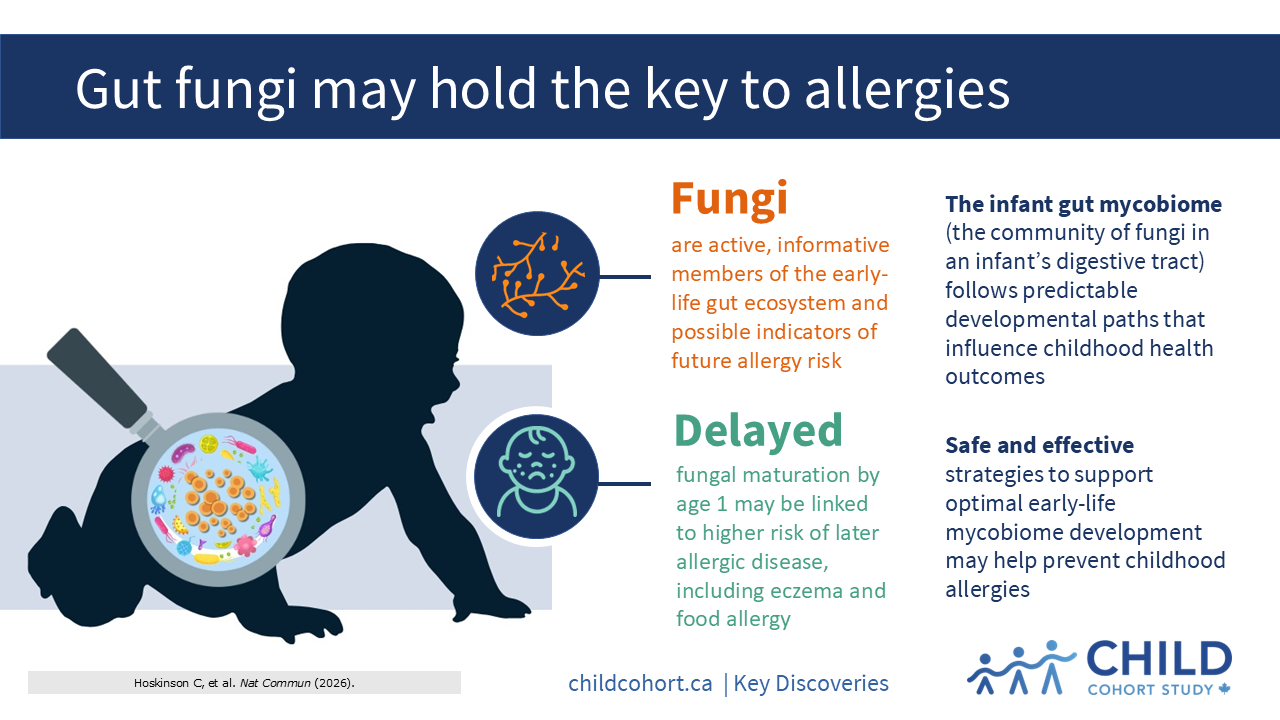
In this study, published in Nature Communications, researchers used CHILD data to demonstrate that gut fungi are active, informative members of the early-life gut ecosystem. They are indicators of early-life microbial development, and of a child’s risk of later developing diseases such as eczema and food allergy.
PREDICTABLE PATHS
The researchers analyzed stool samples from 1,409 CHILD participants, collected in their first year of life, and noticed certain patterns. They found that different fungal species in the gut tend to develop along highly predictable paths.
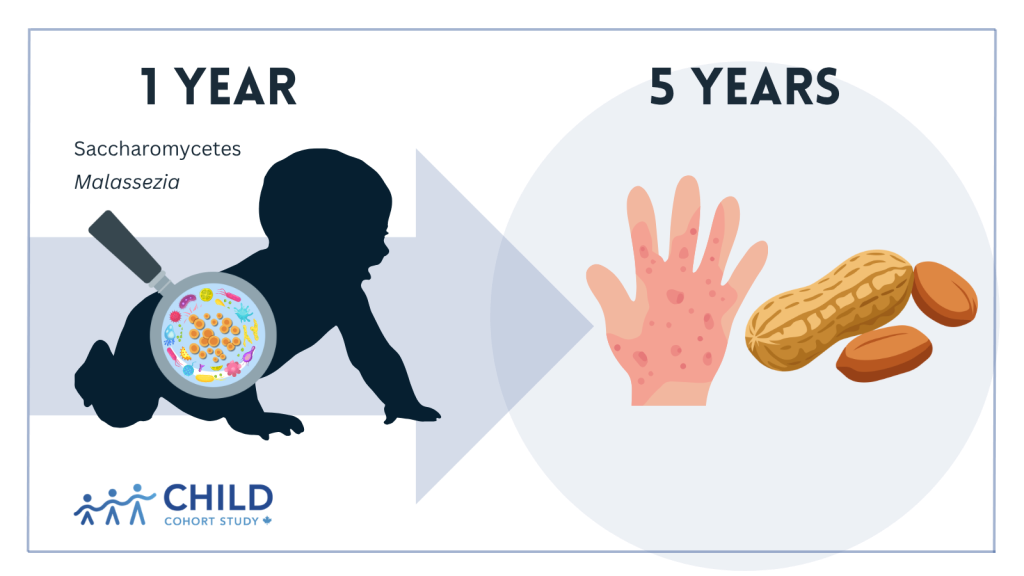
Among the key players in infant gut fungal development, Saccharomycetes usually increases progressively over the first year, while Malassezia tends to decrease.
Where these trends do not play out, the resulting lower degree of fungal maturation at 1 year is associated with the development of eczema and food allergies by age 5.
The researchers also found that different frequencies of certain fungal species are associated with specific immunological outcomes. For example, Malassezia is more common in infants who later develop eczema.
This finding makes a strong case that fungi are important participants in early immune development and deserve a central place in the next generation of microbiome research.