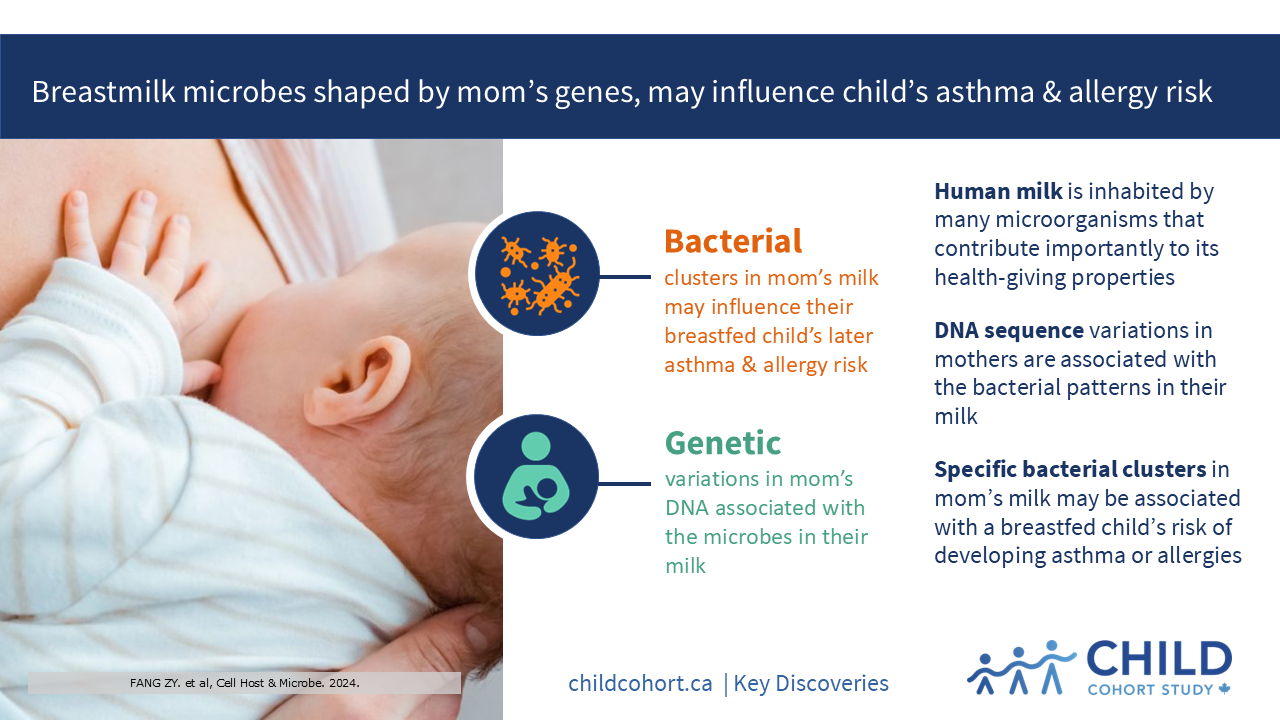
A mother’s genetic variation is associated with which microbes live in her breastmilk. This, in turn, may influence whether her breastfed child later develops asthma or allergies, according to CHILD research.
The study, published in Cell Host & Microbe, analyzed the milk and genetic make-up of 885 mothers participating in CHILD, and examined associations between their genes, the microbes in their milk, and the health outcomes of their breastfed children at 5 years of age, with a particular focus on the development of asthma or allergic sensitivity.
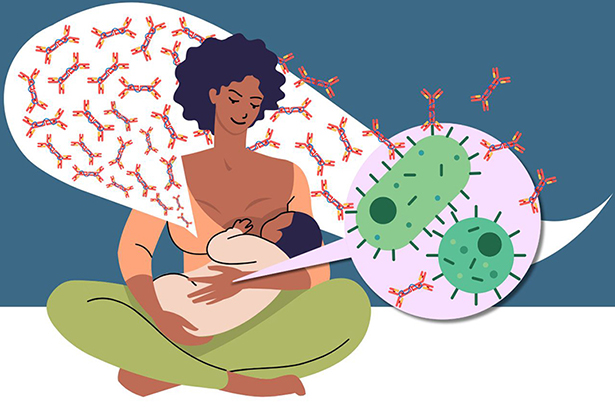
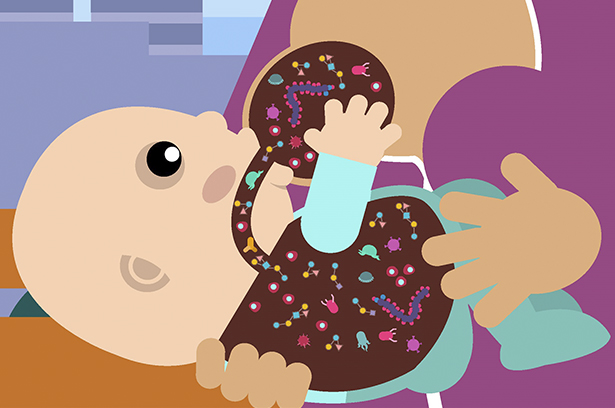
Human milk, the gold standard in infant feeding because it offers so many health benefits, was previously thought to be sterile, but we now know it is inhabited by many microorganisms and that these contribute importantly to its health-giving properties.
BACTERIAL CLUSTERS
The researchers first collected microbiome data from breastmilk samples taken from CHILD moms 3 to 4 months after they gave birth, then applied a data-driven network analysis method to identify groups—or clusters—of bacteria that tended to vary together across breastmilk samples.
They then explored whether these bacterial clusters were associated with the childhood health outcomes of the breastfed children, as documented in CHILD through questionnaires, skin prick tests for allergic sensitization, and parent-reported physician diagnoses.
From this, the researchers saw that the presence of certain bacterial clusters in a mother’s milk were associated with childhood asthma or allergy outcomes, and these associations were stronger than those observed for individual microbes.
MOM’S GENES LINKED TO MICROBES
The researchers further went on to conduct genome-wide association studies (GWASs) that looked at millions of DNA sequence variations in the mothers. They then explored how these variations related to the bacterial patterns in the mothers’ milk—especially the patterns associated with allergy and asthma risk.
The GWASs identified maternal genes associated with various microbes implicated in the long-term health of breastfed children. For example, they identified a gene (NPR1) associated with the overall bacterial diversity of milk, which in turn is associated with lower rates of childhood allergy. Another gene (COTL1) was associated with the abundance of Lawsonella bacteria, which was associated in turn with higher rates of childhood asthma.
The study has improved our understanding of why human milk is such a health-boosting superfood and highlights the importance of including host genomics in microbiome research.