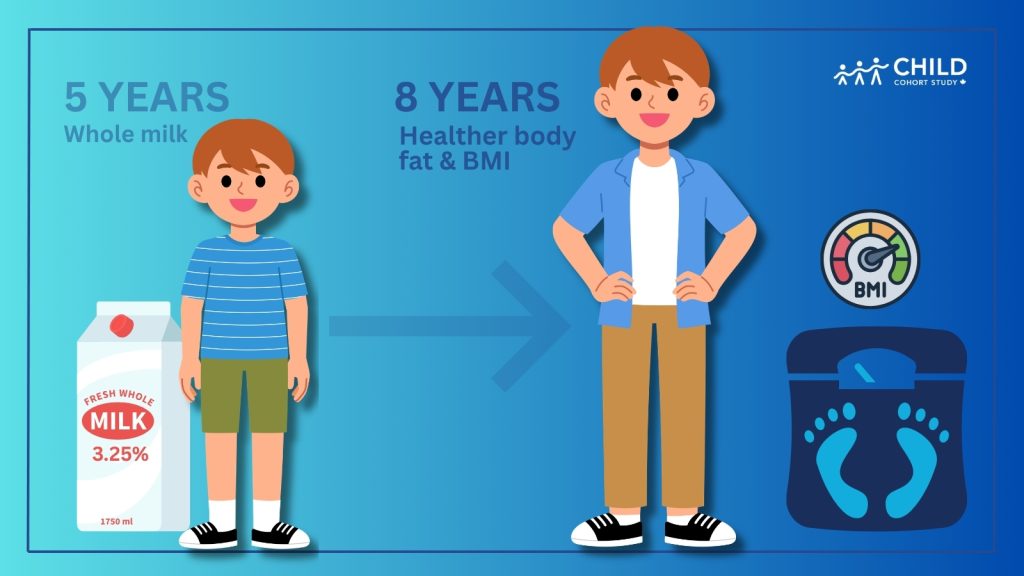
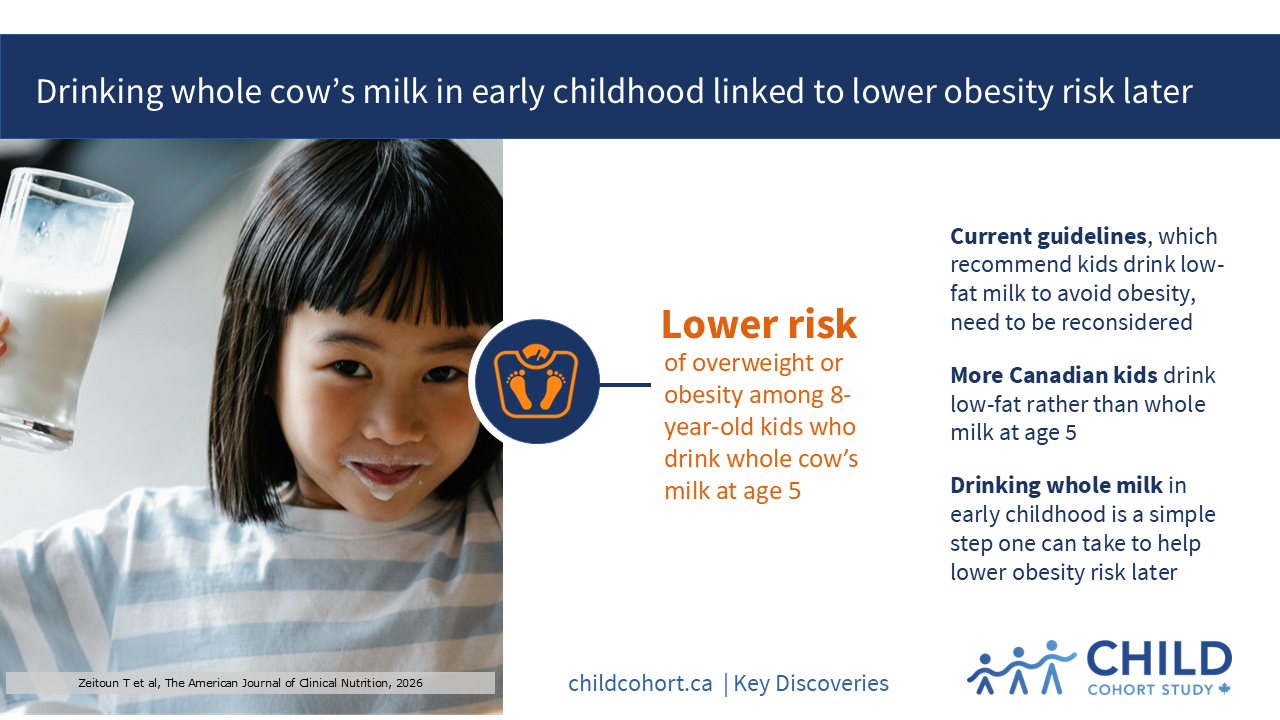
CHILD has found that children who drink whole cow’s milk at age 5 tend to have lower fat mass and less risk of obesity by age 8, compared to kids who drink no fat or skim-fat milk.
Published in The American Journal of Clinical Nutrition, this finding adds to a growing body of evidence challenging the common recommendation that young children should consume reduced-fat or skim milk to prevent obesity.
WHOLE MILK MAY ENCOURAGE LOWER BMI
The researchers analyzed data from over 1500 CHILD participants. At 5 and 8 years old, the parents or caregivers of these participants reported on their diets, including the milk they consumed, and researchers took various physical measurements of the children, including for body fat and obesity.
An analysis of this data showed that at age 5, almost 50% of the children consumed 2% milk and almost 24% consumed 3.25% milk.
Researchers also found that consuming whole milk, compared to skimmed milk, was associated with lower body-mass-index (BMI) scores among these kids at age 5, and with overall lower obesity and adiposity (body fat) indicators at age 8.
POSSIBLE CAUSES
As to why drinking whole milk is associated with lower obesity risk, the researchers say the exact reason is unknown but there are various potential explanations.
Among them, the fact that milk fat may interact with hormones to create a sense of satiety (feeling full), and that the combined components of milk, including fat, may produce unique metabolic effects that similarly influence satiety and energy balance.