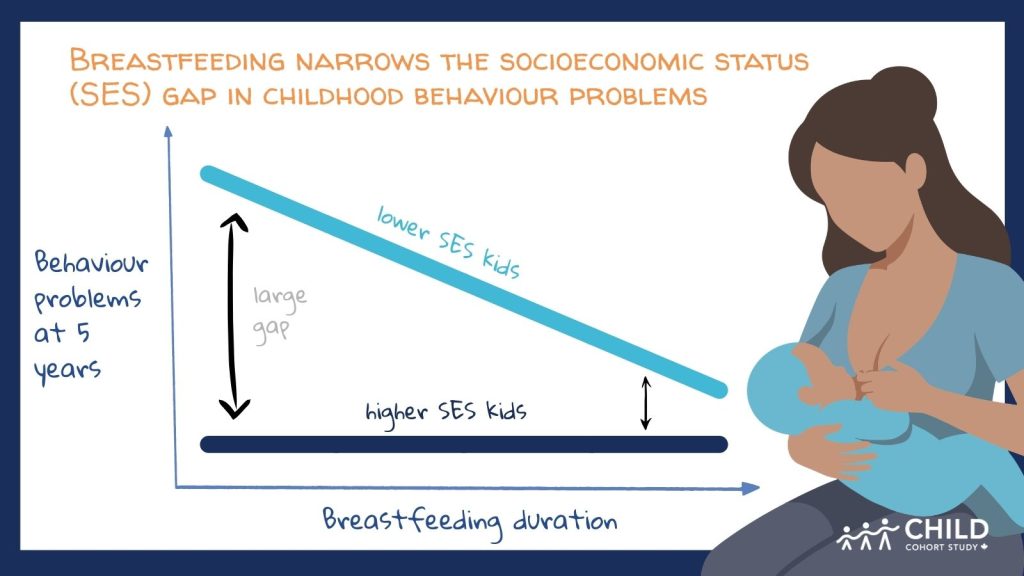
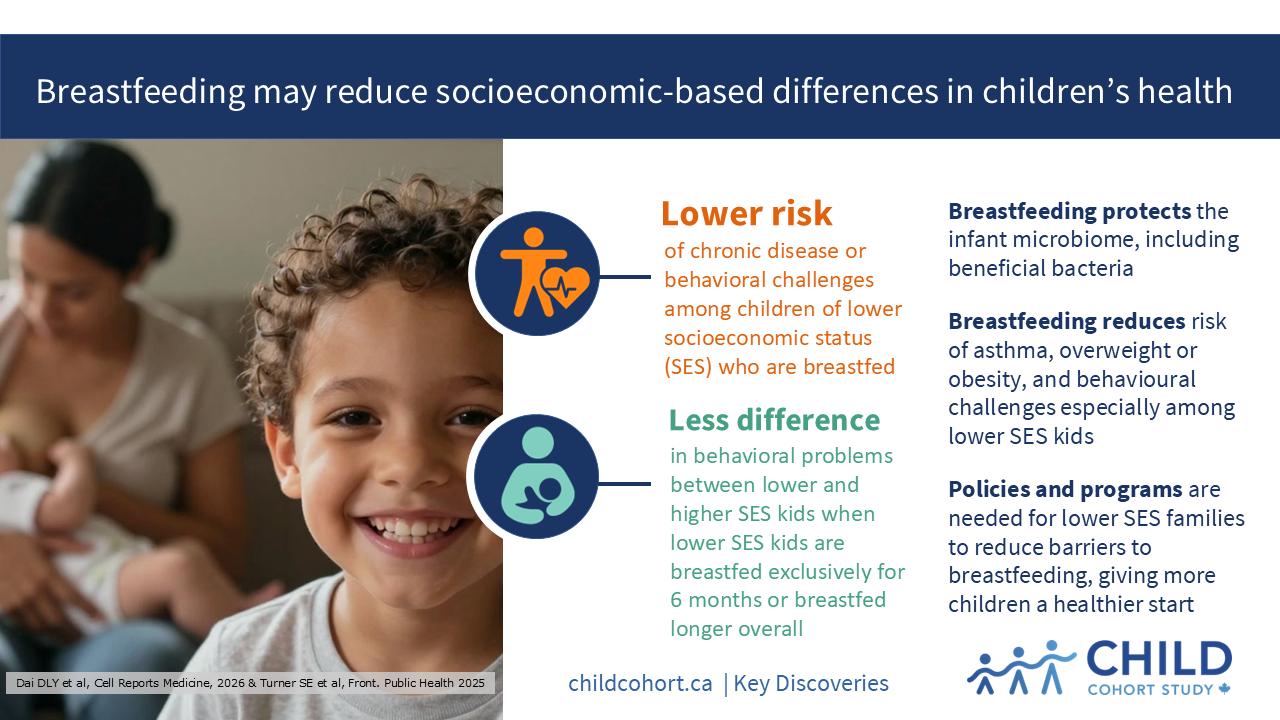
Two studies using CHILD data have found that breastfeeding may reduce socioeconomic-based differences in children’s health.
The first study found that children in families of lower socioeconomic status (SES) tend to follow a different health path than children in families of higher SES: They typically run a higher risk of developing asthma and overweight or obesity, and of experiencing behavioural challenges by age five.
PROTECTION THROUGH THE GUT
The research, published in Cell Reports Medicine, also found that breastfeeding appears to provide protection against these same risks. This confirms previous findings, including from CHILD.
Past research highlighted maternal mental health and parent-child attachment as contributors to this outcome. This current study suggests the protective effect of breastfeeding may also stem from its positive influence on the infant gut microbiome.
Using data from 2,752 CHILD families, the team examined over three dozen factors in relation to the infant gut microbiota and four childhood health outcomes linked to chronic disease.
Higher SES was significantly associated with broad differences across exposures, the composition of the infant gut microbiota, and a lower risk of asthma, overweight or obesity, and behavioural challenges at age five.
When the researchers examined which of these differences helped explain the effect of SES on infant development, breastfeeding stood out as a key factor. It was linked to protection of the infant microbiota, including beneficial bacteria, and those benefits extended into early childhood, including lower chronic disease risk at age five. These protective effects were especially strong among children from lower-SES families.