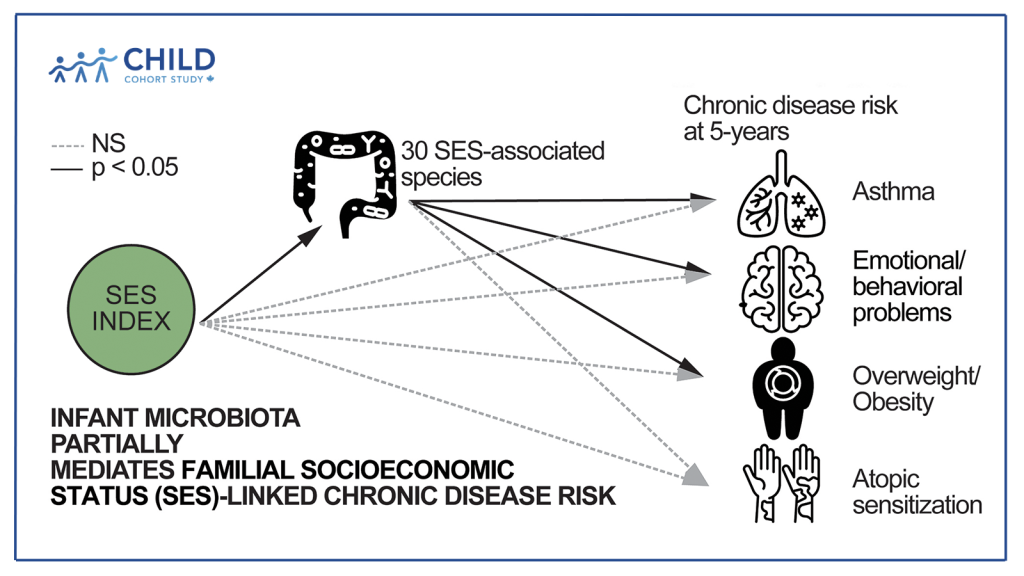
CHILD research out of BC Children’s Hospital Research Institute (BCCHR) has found that children in families of lower socioeconomic status (SES) tend to follow a different health path than children in families of higher SES: they typically run a higher risk of developing asthma and overweight or obesity, and of experiencing behavioural challenges by age five.
The research, published in Cell Reports Medicine, also found that breastfeeding, through its positive influence on the infant gut microbiome, appears to provide protection against these same risks.
“Socioeconomic status isn’t biological, but its effects clearly are,” says CHILD Co-Director Dr. Stuart Turvey, Professor of Pediatrics at BCCHR and co-corresponding author.
“Children from lower-SES families face a higher risk of chronic disease, which can increase financial strain over time and reinforce existing inequities across generations. In this study, we wanted to understand how differences in early-life conditions shape children’s health, and how we might interrupt that cycle.”
Socioeconomic status isn’t biological, but its effects clearly are.
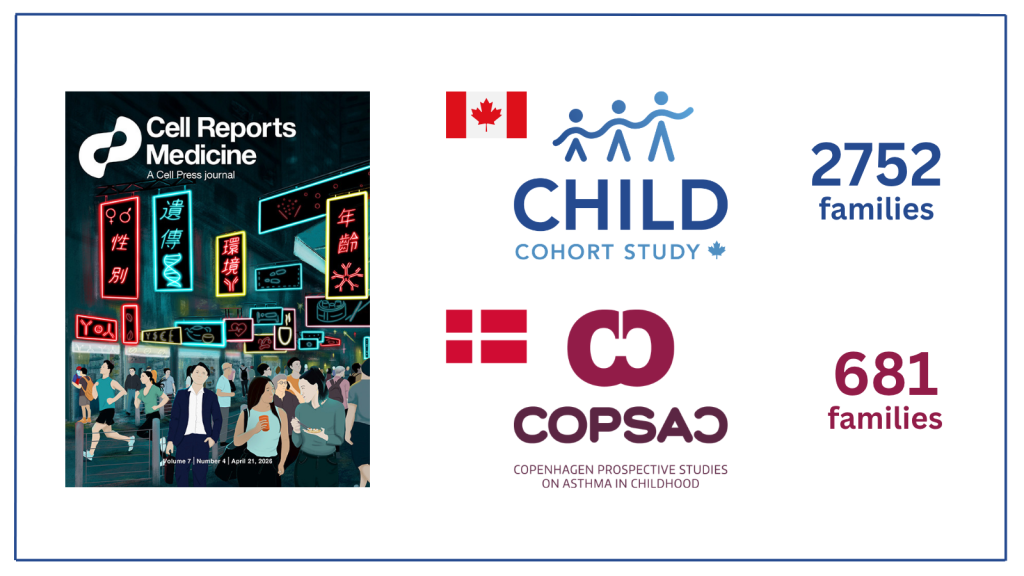
Using extensive data from 2,752 CHILD families, the team examined more than three dozen perinatal factors in relation to the infant gut microbiota and four childhood health outcomes linked to chronic disease. Factors included parental health, in utero and birth exposures, home and neighbourhood environments, infant feeding, and other early-life exposures.
Higher SES was significantly associated with broad differences across exposures, the composition of the infant gut microbiota, and a lower risk of asthma, overweight or obesity, and behavioural challenges at age five.
When the researchers examined which of these differences helped explain the effect of SES on infant development, breastfeeding stood out as a key factor. It was linked to protection of the infant microbiota, including support for beneficial bacteria such as Bifidobacterium infantis (B. infantis), and those benefits extended into early childhood, including lower chronic disease risk at age five. The protective effects of breastfeeding were especially strong among children from lower-SES families. These findings were further supported in independent Danish cohort COPSAC (2010).
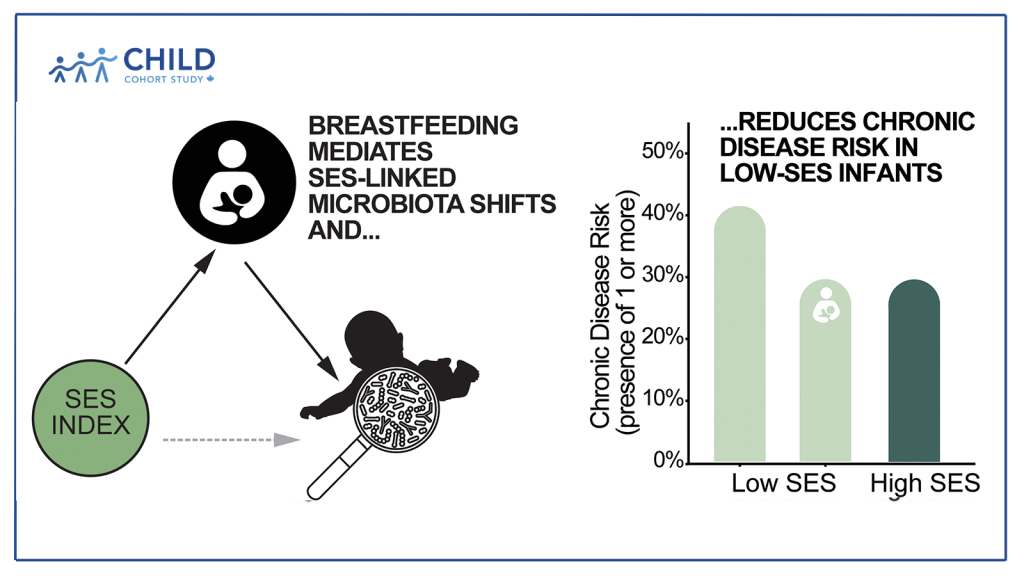
“What surprised us was how consistent the effect was,” said Dr. Darlene Dai, lead author and Biostatistician at BCCHR. “Breastfeeding seemed to act as a shield, protecting the infant microbiota across many different exposures. That protection may be especially important for children facing higher-risk early-life conditions.”
The findings point to broader structural barriers that shape families’ ability to access these protective effects, even in countries with relatively supportive parental leave policies, and highlight the need for more support for families during early infancy.
“We were surprised by how strong the breastfeeding signal still was in Canada and Denmark,” said Dr. Turvey. “It suggests that even with parental leave in place, families are still facing real pressures, and that more support could make a meaningful difference.”
Breastfeeding seemed to act as a shield, protecting the infant microbiota across many different exposures.
The researchers note that breastfeeding may be only part of the story. Infant microbiota development also depends on exposure to beneficial bacteria in the surrounding environment.
“As infants, we don’t just get microbes from our mothers. We also acquire them from the world around us,” said Dr. Charisse Petersen, Research Associate at BCCHR and Deputy Director of the CHILD Study.
“If those beneficial species are disappearing from our communities, babies may not have the microbes they need to fully benefit from breastmilk.”
One species that stood out was B. infantis, a bacterium historically well adapted to the infant gut but now thought to be less common in industrialized countries. It is particularly efficient at metabolizing breastmilk and supporting infant health.
“B. infantis is really a microbial powerhouse,” said Dr. Dai. “It can do a remarkable amount on its own. Without it, it takes many more kinds of beneficial bacteria to get the same benefits.”
In this study, it was found to be protective against three of the four chronic disease-related outcomes examined but was consistently reduced across all CHILD sites compared to other Bifidobacterium species.
Together, these findings highlight the potential value of reintroducing this species into early-life environments where it may now be missing.
Taken together, the findings suggest that the benefits of breastfeeding are shaped not only by individual choice, but also by the social and structural conditions that make breastfeeding more or less possible. The researchers emphasize that these findings are aimed not at families already navigating complex social and economic pressures, but at the systems that shape what is possible for them.
“When outlining the importance of our research findings , we often try to offer families suggestions about clear, positive actions they can take based on our findings,” said Dr. Petersen.
“This paper is different. The real message is that socioeconomic conditions shape what’s possible for families. That makes this a policy conversation.”
By identifying breastfeeding and beneficial microbes as pathways that may help buffer the effects of socioeconomic disadvantage, the researchers hope these findings will help inform policies and supports that give more children a healthier start in life.